But before we change the world, we need to change the way we think.
When I was asked to edit an issue of the New Statesman I said yes because it was a beautiful woman asking me. I chose the subject of revolution because theNew Statesman is a political magazine and imagining the overthrow of the current political system is the only way I can be enthused about politics.
When people talk about politics within the existing Westminster framework I feel a dull thud in my stomach and my eyes involuntarily glaze. Like when I’m conversing and the subject changes from me and moves on to another topic. I try to remain engaged but behind my eyes I am adrift in immediate nostalgia; “How happy I was earlier in this chat,” I instantly think.
I have never voted. Like most people I am utterly disenchanted by politics. Like most people I regard politicians as frauds and liars and the current political system as nothing more than a bureaucratic means for furthering the augmentation and advantages of economic elites. Billy Connolly said: “Don’t vote, it encourages them,” and, “The desire to be a politician should bar you for life from ever being one.”
I don’t vote because to me it seems like a tacit act of compliance; I know, I know my grandparents fought in two world wars (and one World Cup) so that I’d have the right to vote. Well, they were conned. As far as I’m concerned there is nothing to vote for. I feel it is a far more potent political act to completely renounce the current paradigm than to participate in even the most trivial and tokenistic manner, by obediently X-ing a little box.
Total revolution of consciousness and our entire social, political and economic system is what interests me, but that’s not on the ballot. Is utopian revolution possible? The freethinking social architect Buckminster Fuller said humanity now faces a choice: oblivion or utopia. We’re inertly ambling towards oblivion, is utopia really an option?
I heard recently Oliver Cromwell’s address to the rump parliament in 1653 (online, I’m not a Time Lord) where he bawls out the whole of the House of Commons as “whores, virtueless horses and money-grabbing dicklickers”. I added the last one but, honestly, that is the vibe. I was getting close to admiring old Oliver for his “calls it as he sees it, balls-out” rhetoric till I read about him on Wikipedia and learned that beyond this brilliant 8 Mile-style takedown of corrupt politicians he was a right arsehole; starving and murdering the Irish and generally (and surprisingly for a Roundhead) being a total square. The fact remains that if you were to recite his speech in parliament today you’d be hard pushed to find someone who could be legitimately offended.

I don’t want to get all “Call me Dave, I was chatting to my plumber, man of the people” here, but the fact is I’m a recovering junkie so that means I have to hang out with a lot of other junkies to keep my head together, some of whom are clean, others who are using. Hear you this, regular New Statesman reader, browsing with irritation that the culture of celebrity has just banjoed the arse of another sacred cow and a Halloween-haired, Sachsgate-enacting, estuary-whining, glitter-lacquered, priapic berk has been undeservedly hoisted upon another cultural plinth, but – young people, poor people, not-rich people, most people do not give a fuck about politics.
They see no difference between Cameron, Clegg, Boris, either of the Milibands or anyone else. To them these names are as obsolete as Lord Palmerston or Denis Healey. The London riots in 2011, which were condemned as nihilistic and materialistic by Boris and Cameron (when they eventually returned from their holidays), were by that very definition political. These young people have been accidentally marketed to their whole lives without the economic means to participate in the carnival. After some draconian sentences were issued, measures that the white-collar criminals who capsized our economy with their greed a few years earlier avoided, and not one hoodie was hugged, the compliance resumed. Apathy reigned.
There’s little point bemoaning this apathy. Apathy is a rational reaction to a system that no longer represents, hears or addresses the vast majority of people. A system that is apathetic, in fact, to the needs of the people it was designed to serve. To me a potent and triumphant leftist movement, aside from the glorious Occupy rumble, is a faint, idealistic whisper from sepia rebels. The formation of the NHS, holiday pay, sick pay, the weekend – achievements of peaceful trade union action were not achieved in the lifetime of the directionless London rioters. They are uninformed of the left’s great legacy as it is dismantled around them.
Of the two possible reactions to the mechanised indifference and inefficiency of their alleged servants, not leaders – apathy or rage – apathy is the more accessible and is certainly preferable to those who govern.
Righteous rage surfaces rarely only in the most galling of circumstances, the riots or the Milly Dowler intrusion, where a basic taboo was transgressed, then we reach beneath the stagnant quotidian to the omnipresent truth within. In this case “respect for the dead”, the motif upon which Sophocles’s Antigone is founded.
Along with the absolute, all-encompassing total corruption of our political agencies by big business, this apathy is the biggest obstacle to change. We can’t alter the former without removing the latter. Can this be achieved? Obviously this is a rhetorical question and without wanting to spunk the surprise ending the answer is yes.
First, though, I should qualify my right to even pontificate on such a topic and in so doing untangle another of revolution’s inherent problems. Hypocrisy. How dare I, from my velvet chaise longue, in my Hollywood home like Kubla Khan, drag my limbs from my harem to moan about the system? A system that has posited me on a lilo made of thighs in an ocean filled with honey and foie gras’d my Essex arse with undue praise and money.
I once, during the early steps of this thousand-mile journey to decadent somnambulance, found myself embroiled in a London riot. It was around the bafflement of the millennium and we were all uptight about zeroes lining up three wide and planes falling from the sky and the national mood was weird.
At this point I’d attended a few protests and I loved them. At a Liverpool dockers march, the chanting, the bristling, the rippedup paving stones and galloping police horses in Bono glasses flipped a switch in me. I felt connected, on a personal level I was excited by the chaos, a necessary component of transition, I like a bit of chaos however it’s delivered. The disruption of normalcy a vital step in any revolution. Even aesthetically, aside from the ideology, I beam at the spectacle of disruption, even when quite trivial. As a boy a bird in the house defecating on our concept of domesticity as much as our settee, a signal of the impermanence and illusory nature of our humdrum comforts. The riot in question came when I was working at MTV and for the first time in my life had money, which to me was little more than regal letters to be delivered to drug dealers.
My involvement in the riot came without invitation or intention, I was in fact oxymoronically shopping (emphasis on the moron) with a stylist in the West End, at the expense of MTV, which is perhaps the planet’s most obvious purveyor of neurodross and pop-cultural claptrap – like a glistening pink pony trotting through your mind shitting glitter.
I was smacked up and gacked up and togged up in the nitwit livery of late-Nineties television, a crackhead Harlequin with Hoxton hair, when it came to my attention that Reclaim the Streets had a march on. On learning this, I without a flicker of self-awareness palmed off my shopping bags jammed with consumer treats and headed for the throng. Just before the kettling and boredom, while things were still buzzing, bongos, bubbles and whistles, I was hurt when a fellow protester piously said to me: “What you doing here? I’ve seen you, you work for MTV.” I felt pretty embarrassed that my involvement was being questioned, in a manner that is all too common on the left. It’s been said that: “The right seeks converts and the left seeks traitors.” This moral superiority that is peculiar to the left is a great impediment to momentum. It is also a right drag when you’re trying to enjoy a riot.
Perhaps this is why there is currently no genuinely popular left-wing movement to counter Ukip, the EDL and the Tea Party; for an ideology that is defined by inclusiveness, socialism has become in practice quite exclusive. Plus a bit too serious, too much up its own fundament and not enough fun. The same could be said of the growing New Age spiritual movement, which could be a natural accompaniment to social progression. I’m a bit of a tree-hugging, Hindu-tattooed, veggie meditator myself but first and foremost I want to have a fucking laugh. When Ali G, who had joined protesters attempting to prevent a forest being felled to make way for a road, shouted across the barricade, “You may take our trees, but you’ll never take our freedom,” I identified more with Baron Cohen’s amoral trickster than the stern activist who aggressively admonished him: “This is serious, you cunt.”
A bit too fucking serious, actually. As John Cleese said, there is a tendency to confuse seriousness with solemnity. Serious causes can and must be approached with good humour, otherwise they’re boring and can’t compete with the Premier League and Grand Theft Auto. Social movements needn’t lack razzmatazz.
The right has all the advantages, just as the devil has all the best tunes. Conservatism appeals to our selfishness and fear, our desire and self-interest; they neatly nurture and then harvest the inherent and incubating individualism.
I imagine that neurologically the pathway travelled by a fearful or selfish impulse is more expedient and well travelled than the route of the altruistic pang. In simple terms of circuitry I suspect it is easier to connect these selfish inclinations.
This natural, neurological tendency has been overstimulated and acculturated. Materialism and individualism do in moderation make sense. If you are naked and starving and someone gives you soup and a blanket your happiness will increase. That doesn’t mean that if you have 10,000 silken blankets and a golden cauldron of soup made from white rhino cum your happiness will continue to proportionately increase until you’re gouched out, swathed in silk, gurgling up pearlescent froth.
Biomechanically we are individuals, clearly. On the most obvious frequency of our known sensorial reality we are independent anatomical units. So we must take care of ourselves. But with our individual survival ensured there is little satisfaction to be gained by enthroning and enshrining ourselves as individuals.
These problems that threaten to bring on global destruction are the result of legitimate human instincts gone awry, exploited by a dead ideology derived from dead desert myths. Fear and desire are the twin engines of human survival but with most of our basic needs met these instincts are being engaged to imprison us in an obsolete fragment of our consciousness. Our materialistic consumer culture relentlessly stimulates our desire. Our media ceaselessly engages our fear, our government triangulates and administrates, ensuring there are no obstacles to the agendas of these slow-thighed beasts, slouching towards Bethlehem.
For me the solution has to be primarily spiritual and secondarily political. This, too, is difficult terrain when the natural tribal leaders of the left are atheists, when Marxism is inveterately Godless. When the lumbering monotheistic faiths have given us millennia of grief for a handful of prayers and some sparkly rituals.
By spiritual I mean the acknowledgement that our connection to one another and the planet must be prioritised. Buckminster Fuller outlines what ought be our collective objectives succinctly: “to make the world work for 100 per cent of humanity in the shortest possible time through spontaneous co-operation without ecological offence or the disadvantage of anyone”. This maxim is the very essence of “easier said than done” as it implies the dismantling of our entire socio-economic machinery. By teatime.
Can this be achieved when we are enslaved by old ideologies, be they theological or economic? The absurdity of our localised consciousness and global ignorance hit me hard when I went on a Comic Relief trip to Kenya.
Like most of the superficially decent things I do in life, my motivation was to impress women more than to aid the suffering. “A couple of days in Africa,” I thought, “and a lifetime cashing in on pics of me with thin babies, speculate to accumulate,” I assured my anxious inner womaniser.
After visiting the slums of Kibera, where a city built from mud and run on fear festers on the suburbs of Nairobi, I was sufficiently schooled by Live Aid and Michael Buerk to maintain an emotional distance. It was only when our crew visited a nearby rubbish dump that the comforting buoyancy of visual clichés rinsed away by the deluge of a previously inconceivable reality. This rubbish dump was not like some tip off the M25 where you might dump a fridge freezer or a smashed-in mattress. This was a nation made of waste with no end in sight. Domestic waste, medical waste, industrial waste formed their own perverse geography. Stinking rivers sluiced through banks of putrid trash, mountains, valleys, peaks and troughs all formed from discarded filth. An ecology based on our indifference and ignorance in the “cradle of civilisation” where our species is said to have originated. Here amid the pestilence I saw Armageddon. Here the end of the world is not a prophecy but a condition. A demented herd chewed polystyrene cud. Sows fed their piglets in the bilge. Gloomy shadows split the sun as marabou storks, five foot in span with ragged labial throats, swooped down. My mate Nik said he had to revise his vision of hell to include what he’d seen.

Kibera in Kenya. Photo: Getty
Here and there, picking through this unending slander, children foraged for bottle tops, which had some value, where all is worthless.
For a while when I returned to my sanitised house and my sanitised state of mind I guiltily thumbed bottle tops for a moment before I disposed of them; temporarily they were like crucifixes for these kids, sacrificed that I may live in privilege. A few weeks later I was in Paris at a Givenchy fashion show where the most exquisite garments cantered by on underfed, well-bred clothes horses. The spectacle was immaculate, smoke-filled bubbles burst on to the runway. To be here in this gleaming sophistication was heaven. Here starvation is a tool to achieve the perfect perpendicular pelvis.
Now, I bow to no one in my appreciation of female beauty and fancy clobber but I could not wrench the phantom of those children from my mind, in this moment I felt the integration; that the price of this decadence was their degradation. That these are not dislocated ideas but the two extremes are absolutely interdependent. The price of privilege is poverty. David Cameron said in his conference speech that profit is “not a dirty word”. Profit is the most profane word we have. In its pursuit we have forgotten that while individual interests are being met, we as a whole are being annihilated. The reality, when not fragmented through the corrupting lens of elitism, is we are all on one planet.
To have such suffering adjacent to such excess is akin to marvelling at an incomparable beauty, whose face is the radiant epitome of celestial symmetry, and ignoring, half a yard lower down, her abdomen, cancerous, weeping and carbuncled. “Keep looking at the face, put a handbag over those tumours. Strike a pose. Come on, Vogue.”
Suffering of this magnitude affects us all. We have become prisoners of comfort in the absence of meaning. A people without a unifying myth. Joseph Campbell, the comparative mythologist, says our global problems are all due to the lack of relevant myths. That we are trying to sustain social cohesion using redundant ideologies devised for a population that lived in deserts millennia ago. What does it matter if 2,000 years ago Christ died on the cross and was resurrected if we are not constantly resurrected to the truth, anew, moment to moment? How is his transcendence relevant if we do not resurrect our consciousness from the deceased, moribund mind of our obsolete ideologies and align with our conditions?
The model of pre-Christian man has fulfilled its simian objectives. We have survived, we have created agriculture and cities. Now this version of man must be sacrificed that we can evolve beyond the reaches of the ape. These stories contain great clues to our survival when we release ourselves from literalism and superstition. What are ideologies other than a guide for life? Throughout paganism one finds stories that integrate our species with our environment to the benefit of both. The function and benefits of these belief matrixes have been lost, with good reason. They were socialist, egalitarian and integrated. If like the Celtic people we revered the rivers we would prioritise this sacred knowledge and curtail the attempts of any that sought to pollute the rivers. If like the Nordic people we believed the souls of our ancestors lived in the trees, this connection would make mass deforestation anathema. If like the native people of America we believed God was in the soil what would our intuitive response be to the implementation of fracking?
Little wonder then that these myths, these codes for our protection and survival, have been aborted and replaced with nihilistic narratives of individualism, peopled by sequin-covered vacuous heroes. Now we only riot and roar in hot summers or at football scores or when our dead are desecrated by the vile publications that convey this corrosive, corrupting, deceitful narrative.
I deplore corporate colonialism but not viscerally. The story isn’t presented in a way that rouses me. Apple seems like such an affable outfit; I like my iPhone. Occasionally I hear some yarn about tax avoidance or Chinese iPhone factory workers committing suicide because of dreadful working conditions but it doesn’t really bother me, it seems so abstract. Not in the same infuriating, visceral, immediate way that I get pissed off when I buy a new phone and they’ve changed the fucking chargers, then I want to get my old, perfectly good charger and lynch the executives with the cable. They make their own product, which they’ve already sold me, deliberately obsolete just to rinse a few more quid out of us.
But profit is not a dirty word. I hate big banks and banking and bankers but when they rip us off and do us down with derivatives and foreclosures and bundles, I roll my eyes. However when I see that I’m getting a £3.50 surcharge at a cash machine I want to put their fucking windows through. This is the selfish impulse the right expertly engages but ought to belong to the left. We have to see that all these things are connected. We have succumbed to an ideology that is 100 per cent corrupt and must be overthrown. The maintenance of this system depends on our belief that “there’s nothing we can do”; well, the government seemed pretty shook up during those riots. They snapped out of their Tuscan complacency quick enough then, and that was for a few pissed-off kids.
Those kids weren’t apathetic either. They felt impotent because they are given no status, structure or space. Perhaps in a system where legitimate, peaceful protest was heard that may have been an appropriate option for them, but Stop the War marches don’t stop wars, at the top of the pyramid larceny is rewarded with big bonuses. They may have been misdirected but they certainly had some vim. How beautiful it would be to see their passion utilised and directed at the source of their grievances.
The system is adept at turning our aggression on to one another. We condemn the rioters. The EDL condemns immigrants. My new rule for when I fancy doing a bit of the ol’ condemnation is: “Do the people I’m condemning have any actual power?” The immigrant capacity to cause social negativity is pretty slender. Especially if you live in luxury in Hollywood and the only immigrants you meet are Gabby, my Mexican second mother, and Polo who looks after the garden. It probably seems more serious if you’re in a council flat in Tower Hamlets. Still the fact remains that an immigrant is just someone who used to be somewhere else. Free movement of global capital will necessitate the free movement of an affordable labour force to meet the demands that the free-moving capital has created. The wrath is directed to the symptom, not the problem.
We British seem to be a bit embarrassed about revolution, like the passion is uncouth or that some tea might get spilled on our cuffs in the uprising. That revolution is a bit French or worse still American. Well, the alternative is extinction so now might be a good time to re-evaluate. The apathy is in fact a transmission problem, when we are given the correct information in an engaging fashion, we will stir.
The hypocrisy – me, working for MTV with my fancy shoes – is a problem that can be taken care of incrementally. I don’t mind giving up some of my baubles and balderdash for a genuinely fair system, so can we create one? We have to be inclusive of everyone, to recognise our similarities are more important than our differences and that we have an immediate ecological imperative. This is not a job I’d place in the hot, clammy, grasping palms of Cameron and Osborne. I shook George Osborne’s hand once, by accident, it was like sliding my hand into a dilated cow.
We require a change that is beyond the narrow, prescriptive parameters of the current debate, outside the fortress of our current system. A system predicated on aspects of our nature that are dangerous when systemic: greed, selfishness and fear. These are old, dead ideas. That’s why their business is conducted in archaic venues. Antiquated, elegant edifices, lined with oak and leather. We no longer have the luxury of tradition.
Cameron, Osborne, Boris, all of them lot, they went to the same schools and the same universities that have the same decor as the old buildings from which they now govern us. It’s not that they’re malevolent; it’s just that they’re irrelevant. Relics of an old notion, like Old Spice: it’s fine that it exists but no one should actually use it.
We are still led by blithering chimps, in razor-sharp suits, with razor-sharp lines, pimped and crimped by spin doctors and speech-writers. Well-groomed ape-men, superficially altered by post-Clintonian trends.
We are mammals on a planet, who now face a struggle for survival if our species is to avoid expiry. We can’t be led by people who have never struggled, who are a dusty oak-brown echo of a system dreamed up by Whigs and old Dutch racists.
We now must live in reality, inner and outer. Consciousness itself must change. My optimism comes entirely from the knowledge that this total social shift is actually the shared responsibility of six billion individuals who ultimately have the same interests. Self-preservation and the survival of the planet. This is a better idea than the sustenance of an elite. The Indian teacher Yogananda said: “It doesn’t matter if a cave has been in darkness for 10,000 years or half an hour, once you light a match it is illuminated.” Like a tanker way off course due to an imperceptible navigational error at the offset we need only alter our inner longitude.
Capitalism is not real; it is an idea. America is not real; it is an idea that someone had ages ago. Britain, Christianity, Islam, karate, Wednesdays are all just ideas that we choose to believe in and very nice ideas they are, too, when they serve a purpose. These concepts, though, cannot be served to the detriment of actual reality.
The reality is we have a spherical ecosystem, suspended in, as far as we know, infinite space upon which there are billions of carbon-based life forms, of which we presume ourselves to be the most important, and a limited amount of resources.
The only systems we can afford to employ are those that rationally serve the planet first, then all humanity. Not out of some woolly, bullshit tree-hugging piffle but because we live on it, currently without alternatives. This is why I believe we need a unifying and in - clusive spiritual ideology: atheism and materialism atomise us and anchor us to one frequency of consciousness and inhibit necessary co-operation.
In 2013 (another made-up imaginary concept) we cannot afford to giggle, drivel and burp like giant, pube-covered babies about quaint, old-fashioned notions like nation, capitalism and consumerism simply because it’s convenient for the tiny, greedy, myopic sliver of the population that those outmoded ideas serve. I will never vote because, as Billy said, “It encourages them.” I did a job with Billy Connolly and Eddie Izzard not long ago and the three of us shared a dressing room. Eddie believes in democracy and spoke sincerely of his political ambitions. “One day I’d like to be a politician . . .” he said. I spoke of my belief that change could only come from within. “I’d like to be a spiritual orator . . .” I said grandly.
Billy eyed us both, with kindly disapprobation. “I’d like to be a nuisance,” he said. “I want to be a troublemaker, there in the gallery in parliament shouting RUBBISH and PROVE IT.” Who am I to argue with The Great Trickster Connolly? I will never vote and I don’t think you should, either.
To genuinely make a difference, we must become different; make the tiny, longitudinal shift. Meditate, direct our love indiscriminately and our condemnation exclusively at those with power. Revolt in whatever way we want, with the spontaneity of the London rioters, with the certainty and willingness to die of religious fundamentalists or with the twinkling mischief of the trickster. We should include everyone, judging no one, without harming anyone. The Agricultural Revolution took thousands of years, the Industrial Revolution took hundreds of years, the Technological Revolution took tens, the Spiritual Revolution has come and we have only an instant to act.
Now there is an opportunity for the left to return to its vital, virile, vigorous origins. A movement for the people, by the people, in the service of the land. Socialism’s historical connection with spiritual principles is deep. Sharing is a spiritual principle, respecting our land is a spiritual principle. May the first, May Day, is a pagan holiday where we acknowledge our essential relationship with our land. I bet the Tolpuddle martyrs, who marched for fair pay for agricultural workers, whose legacy is the right for us to have social solidarity, were a right bunch of herberts if you knew them. “Thugs, yobs, hooligans,” theDaily Mail would’ve called them. Our young people need to know there is a culture, a strong, broad union, that they can belong to, that is potent, virile and alive. At this time when George and Dave pilfer and pillage our land and money for their oligarch mates, at this time when the Tories are taking the EU to court to stop it curtailing their banker pals’ bonuses, that there is something they can do. Take to the streets, together, with the understanding that the feeling that you aren’t being heard or seen or represented isn’t psychosis; it’s government policy.
But we are far from apathetic, we are far from impotent. I take great courage from the groaning effort required to keep us down, the institutions that have to be fastidiously kept in place to maintain this duplicitous order. Propaganda, police, media, lies. Now is the time to continue the great legacy of the left, in harmony with its implicit spiritual principles. Time may only be a human concept and therefore ultimately unreal, but what is irrefutably real is that this is the time for us to wake up.
The revolution of consciousness is a decision, decisions take a moment. In my mind the revolution has already begun.
Find Russell on Twitter: @rustyrockets. To subscribe to the New Statesman,click here. Watch Russell introducing the contents of the rest of his issue:


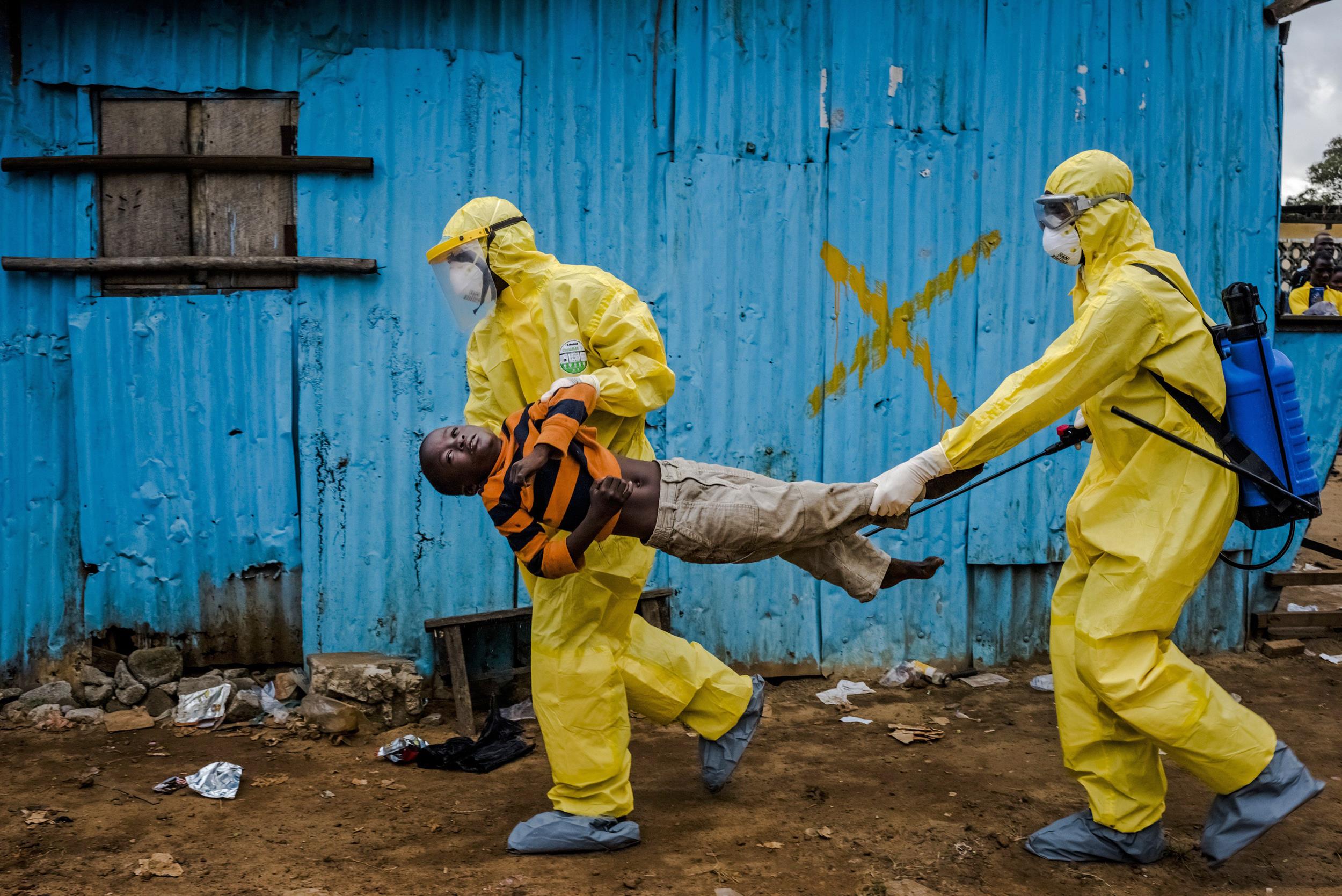 今年爆發的伊波拉病毒疫情,規模為歷年之最。根據
 早在1976年就發現了伊波拉病毒,但因為受害者多為非洲居民,生產疫苗或治療藥物無利可圖,所以藥廠遲遲不願投入資金研發。(影像來源:
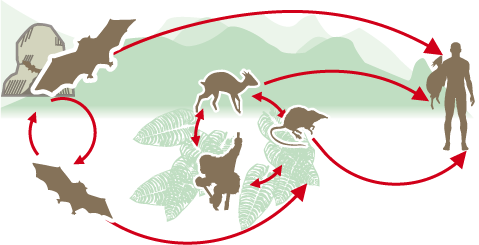 人畜共生傳染病,佔人類歷史上傳染病的大宗。隨著人類與其他生物間更加密集的接觸,感染的可能性也會增加。(影像來源:
